Autonomy, Freedom and Control
The world is ours to take back.
In this essay, I lay out some preliminary pointers to concepts like autonomy, freedom and control, heavily inspired by Daniel Dennett’s Autonomy, Consciousness and Freedom. I then use these concepts to dissect what it means to stay in control of your life in an age where human autonomy is coming increasingly under threat.
I. Freedom
Following Dennett, I would like to borrow the term freedom from its use in engineering and mathematics: an independent way that a system can move or change configuration.
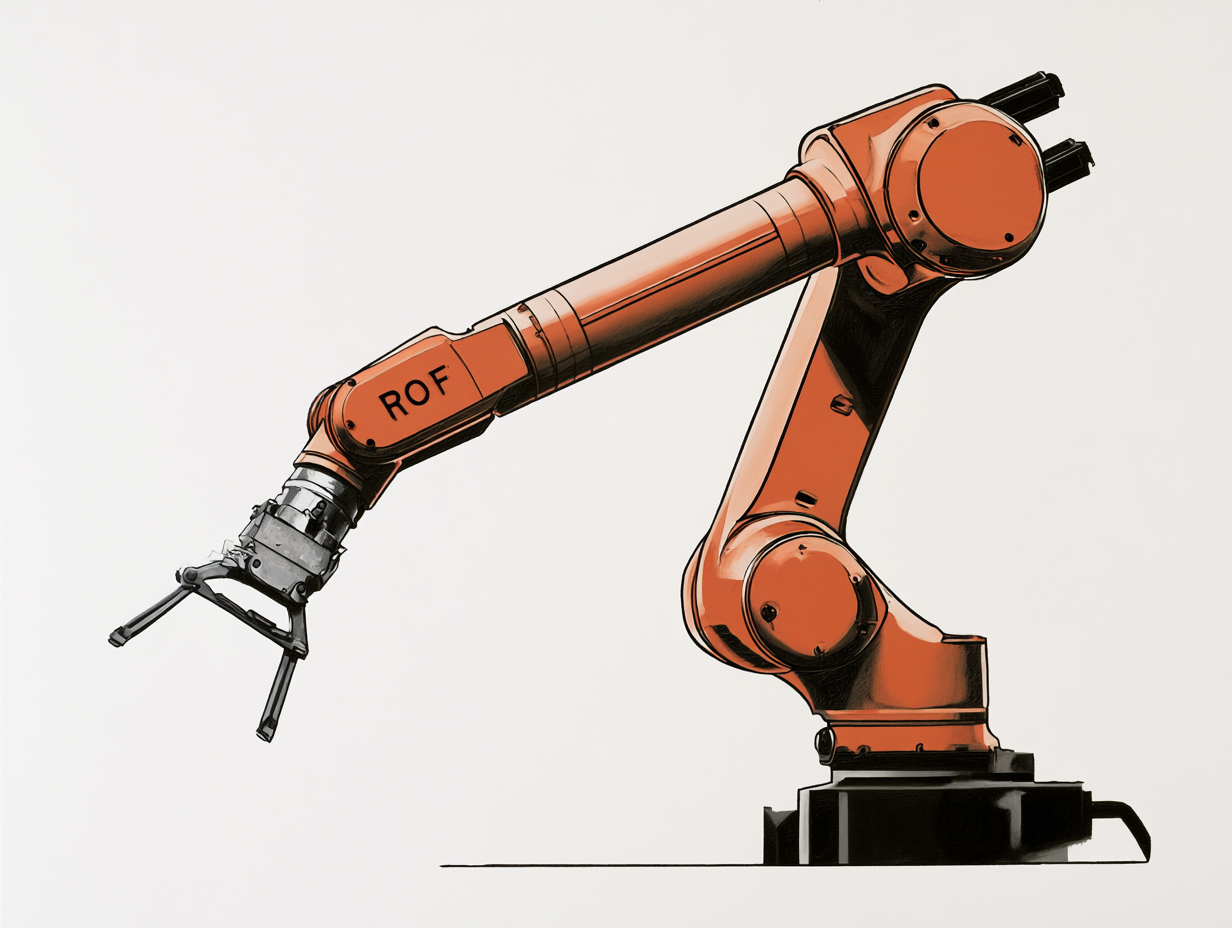
Below is an image of a robotic arm with 5 degrees of freedom: it can rotate around its base, any of its three elbow joints and it can open and close its pincer.
To abstract from the technical definition a bit, I will use the term freedom to refer to an agent’s action space. Your freedom is restricted by placing you in chains or locking you in a room, as you have been restricted in your ability to take many actions that you otherwise could have.
Importantly, freedom is not a scalar quantity; it can vary along many different axes. Some choices may simultaneously reduce some kinds of freedoms and increase others. For example, buying a car gives you the freedom to travel to more places conveniently, while removing your freedom to purchase other items with the money you just spent. Whether this choice is good or bad depends on which axes of freedom you care most about.
II. Control
Control is the modulation of freedoms in order to achieve a goal. A classic example of this is a thermostat that turns its heating element on and off to ensure the room remains at a certain temperature.
The Good Regulator Theorem states that if you want to control a system, you need a model of that system. This usually requires some ways of gaining input from that system, and given a limited representational capacity, also requires abstraction across the irrelevant parts of the systems (the thermostat doesn’t need to know how many chairs there are in the room).
Your capacity to control a system is determined by a combination of two things: your freedoms - the affordances through which you can affect the system, and your understanding - your ability to model and predict the relevant parts of your environment.
III. Autonomy
Now that we know what control is, we can distinguish between two types of control: self-control (autonomy) and remote-control (heteronomy).
Consider the difference between a remote control drone and an autonomous drone. The autonomous drone has on-board circuitry that (at least to some extent) determines what actions the drone will take, instead of an external operator in the remote-control case.
In the case of humans, you are autonomous to the extent that you are the one in control of your decisions. If your actions are being systematically shaped towards a goal that is not your own, then there is something else controlling you.
Unlike the previous case of the person in chains, if someone has a gun to your head, you are still free to take whatever actions you choose. However, out of fear for your life, you will probably choose the actions that your captor instructs. You are free but not autonomous.
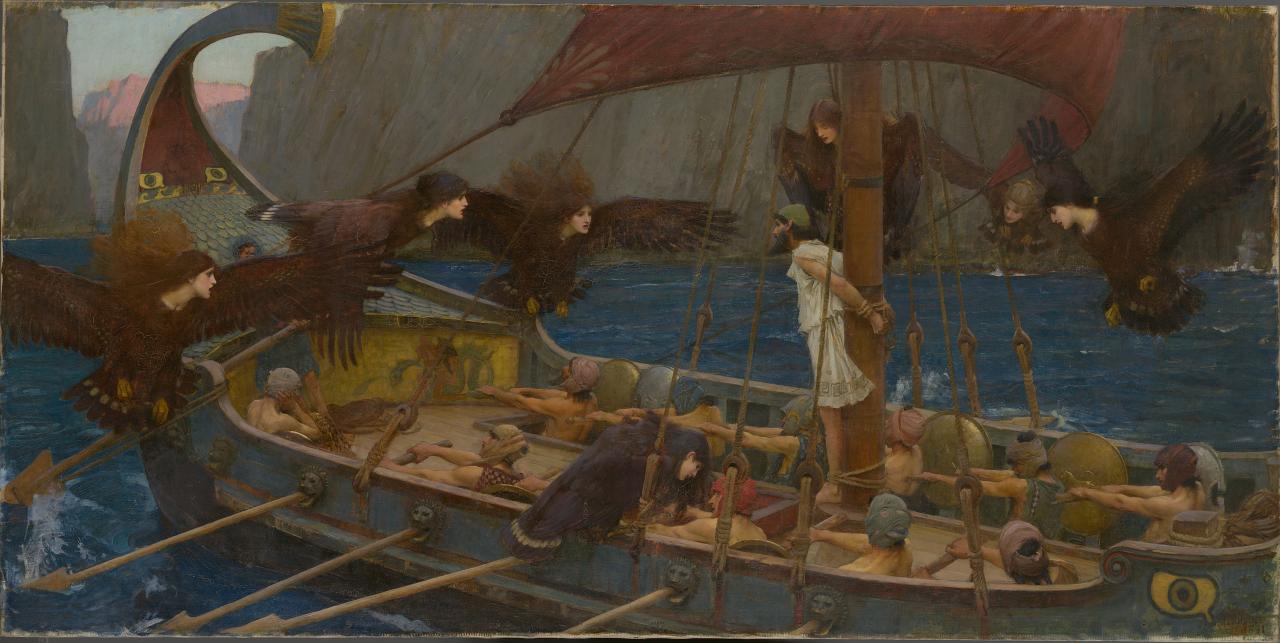
Etymologically, autonomy comes from the Greek autos, meaning “self”, and nomos, meaning “law”, so together they can be taken to mean “determining your own laws” or “self-governance”. I like this meaning because it suggests another interesting divergence between freedom and autonomy: while constraints always reduce your freedom, it seems like autonomy consists of choosing your constraints. By binding himself to the mast of his ship, Odysseus sacrifices freedoms in order to preserve his autonomy.
IV. Losing control
On our current technological trajectory, I believe that the future of human autonomy is coming increasingly under threat.
Recall that control is determined by two factors: freedoms to affect the system and ability to understand and predict the system. Technology can certainly extend our autonomy. It can help us understand the world and ourselves. It can give us new opportunities and freedoms to do things we couldn’t before.
However, we are also living in an age under more surveillance than ever before: whether this is physical, in the form of facial-recognition enabled CCTV that knows exactly where we are at any time, or digital, in the data harvesting and web of telemetry monitoring our every interaction.
In combination with rapid advances we are now seeing in machine learning, this data enables corporations and governments to form powerful predictive models of us. And technology supplies ever more opportunities to nudge us towards certain beliefs and actions, made worse by the alarming centralisation of our digital ecosystems (just 8 companies account for 55% of all internet traffic). We are lured in by the sweet siren call of Instagram Reels and devote hours to consuming whatever Meta decides to show us.
We are seeing a widening gap between the control exercised by the individual and the control exercised over them. The systems we interact with daily are modelling us with increasing fidelity, while remaining opaque to us; steering our choices, but remaining beyond our reach.
V. A way out
So how do we take back control of our lives?
If control arises from the combination of freedom and prediction, there seem to be 4 kinds of strategy available for fighting back:
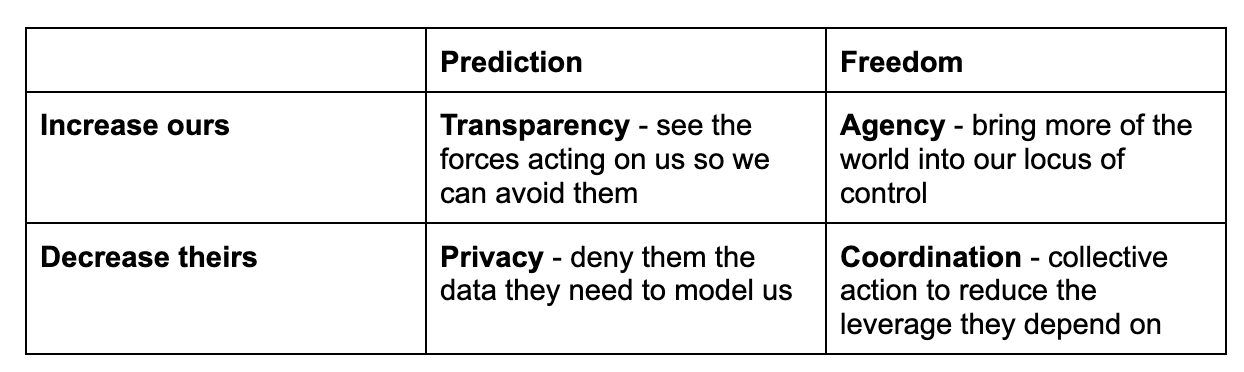
Transparency: When we are aware of forces trying to influence us in various directions, we can decide how we want to respond to them. But if we never know about these influences in the first place we have no way to defend ourselves. Flies can easily dodge away when you try to swat them, but will fly straight into the mouth of a Venus flytrap. Increasing our ability to predict and understand those who are trying to control us makes it much easier for us to dodge. This might look like investigating algorithms for political bias or systems to check to what extent our politicians are voting on their promises.
Privacy: On the flip side, the more of our data we allow to be harvested and sold, the easier it is for us to be modelled. Our efforts to fight back can be anticipated and absorbed by the systems we are trying to overthrow. And our work can be repurposed and trained into AI models designed to replace us.
Agency: We can also increase our own freedoms by pushing back against the forces trying to impose themselves on us, bringing more of the world into the locus of our control. For example, the emerging power of AI coding tools means that we no longer have to accept the compromises of the software that’s on offer to us. Instead, we can architect our own digital environments that work the way we want, free from advertisements and telemetry.
Coordination: Lastly, and perhaps most importantly, we can reduce the freedom of those trying to control us through collective action. A tech company only has power insofar as it has a network of users. A corporation only runs because of its employees doing the work. A state only functions through the compliance of its population. But the reason that these systems are so often poorly aligned to the people they depend on is because coordination is hard. We are stuck hunting hares instead of stags due to the costs of building trust and establishing common knowledge. But technology can massively reduce these coordination costs through providing global communication channels and reducing the friction of building consensus. We have a huge amount of latent collective bargaining power waiting to be unlocked.
If you’re working on technologies for human autonomy or philosophy in this direction, I’d love to chat. Feel free reach out at samueljratnam@gmail.com.
Thanks to Rudolf Laine, Megan Walker, Dan MacKinlay, Youssef Gadallah, Julius Vidal, Jasmine Li, Aleksi Maunu, beworlding and Claude for feedback and discussion.